Rubbish Sucks: Recycling and Sustainability Commitment
Rubbish Sucks is committed to delivering practical, measurable improvements in waste management across the region. Our core ambition is simple: to reduce residual waste, increase resource recovery and support a circular economy where usable items are kept in use. RubbishSucks operates with a clear target — to reach a 70% recycling rate by 2030 across our service areas — and every route, partner and vehicle is aligned to that goal.We work within the boundaries of borough approaches to waste separation, supporting local councils that collect food waste weekly, separate glass and mixed recyclables, or offer kerbside textile collections. This collaborative approach helps us tailor collection streams so material quality remains high: clean paper and card, glass kept separate where possible, and food waste diverted to anaerobic digestion rather than landfill.
Local Transfer Stations and Efficient Logistics
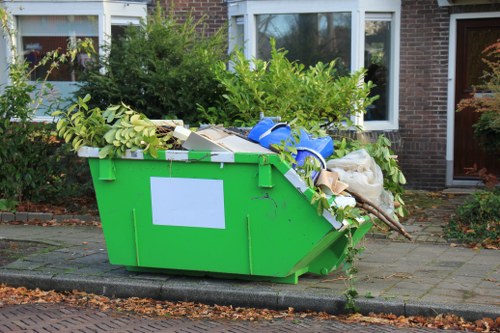
Our network of local transfer stations reduces haul distances and carbon emissions. By sorting and consolidating loads close to source, we cut truck miles and improve contamination control before materials reach reprocessors. The transfer stations we use are selected for proximity to borough boundaries and for their capability to handle separate streams — organics, mixed dry recyclables, glass and bulky items — so we can meet local collection standards and improve overall recycling yields.In areas where the boroughs separate food waste from dry recycling, we coordinate with municipal schedules so that commercial and communal collections complement household services. That means businesses in zones with weekly food waste collections get aligned services, reducing cross-contamination and increasing capture rates of high-value organics.
![A woman and a young girl with light brown hair are sitting at a white table indoors, engaging with a small clear plastic container, possibly preparing for rubbish disposal. The woman, wearing a lime-green top, is smiling at the camera, while the girl, dressed in a white shirt, looks slightly to her right with a cheerful expression. To their right, a large blue recycling bin with a white recycling symbol on its front is positioned on the table, situated in a bright, modern room with natural light streaming through a window. The background features light-colored curtains, a white wall, and a small clock showing the time as approximately 1:05, adding to the tidy and minimalist environment. The scene emphasizes domestic waste management and recycling practices, aligning with services offered by rubbish.sucks in local areas such as [POSTCODE] and [TOWN]. The focus remains on the interaction between the individuals and the waste disposal elements, conveying a professional and neutral tone in line with rubbish removal and recycling services in the UK.](/pub/_photos/rubbish/f1350655232.jpg) Partnerships with Charities and Reuse Organisations
We place a strong emphasis on reuse. Partnering with local charities enables the recovery of furniture, appliances and clothing for redistribution. These partnerships support vulnerable residents and extend the life of many items that would otherwise be incinerated or landfilled. Our reuse partners include furniture banks, textiles charities and community projects that run repair cafes and volunteer-driven resale shops.
Partnerships with Charities and Reuse Organisations
We place a strong emphasis on reuse. Partnering with local charities enables the recovery of furniture, appliances and clothing for redistribution. These partnerships support vulnerable residents and extend the life of many items that would otherwise be incinerated or landfilled. Our reuse partners include furniture banks, textiles charities and community projects that run repair cafes and volunteer-driven resale shops.
To make reuse effective we:
- Divert reusable items from bulky waste collections to charity partners;
- Support charity-led repair and refurbishment schemes for white goods and furniture;
- Coordinate logistics so that donations are picked up, graded and distributed quickly to reduce storage time and costs.
Low-Carbon Fleet: Electric and Hybrid Vans
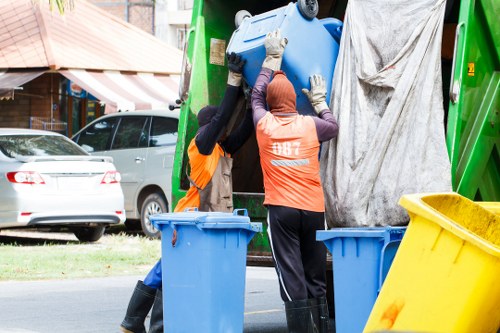
Our vehicle strategy is an essential element of the sustainability plan. Rubbish-Sucks has invested in low-carbon vans and electric vehicles for last-mile collections and charity pickups. These EVs operate on low-emission routes in densely populated boroughs where air quality benefits are greatest. We aim to have at least 50% of our light fleet comprised of battery-electric or plug-in hybrid vans by 2028, reducing tailpipe emissions while maintaining reliable service.Alongside electrification, route optimisation software and driver training reduce idling and improve fuel economy for non-electric vehicles. Combining depot charging, renewable electricity where available, and gradual fleet replacement helps us lower the carbon intensity per tonne of waste handled.
 How we measure progress: clear KPIs include recycling percentage targets, reduced distance-to-transfer-station, and volumes rehomed via partners. We report on contamination rates and aim to reduce contamination of dry recycling by 30% within two years through customer education and improved sorting at transfer stations.
To support borough practices and resident behaviour, we deliver straightforward information tailored to local collection systems. Examples of specific activity across the area include:
- Kerbside food caddy distribution and promotion in boroughs with separate organics collection;
- Dedicated glass banks and targeted glass uplifts where local authorities maintain glass separation;
- Textile and small WEEE campaigns in partnership with charity networks to capture reusable textiles and small electricals.
Rubbish Sucks recognises that sustainability is collaborative. We work with local authorities, transfer station operators, material processors and third-sector organisations to ensure that materials have the best possible next life. Clear contractual commitments with processing partners ensure quality standards and encourage higher-value recycling pathways, not just low-grade downcycling.
Our focus remains on practical outcomes — increasing recycling rates, creating circular supply chains, and reducing the carbon footprint of waste services. Whether listed as Rubbish Sucks, RubbishSucks or Rubbish-Sucks in partner materials, our promise is consistent: to make waste work better for people and the planet, and to hit that 70% recycling target by 2030 through efficient transfer stations, strong charity partnerships, and a rapidly decarbonising fleet.