Rubbish Collection in London for homes, landlords and businesses

Rubbish Sucks provides rubbish collection in London with a practical focus on removing everyday waste, bulky items and mixed loads from properties, workplaces and managed buildings. The service is designed for customers who need a straightforward clearance option rather than an overcomplicated process, with our team dealing with the collection, transport and lawful handling of suitable waste streams. The aim is to make a booking feel clear from the start, with the work shaped around the type of rubbish, the access to the property and the level of sorting already done on site.
Typical collections can include bagged rubbish, loose household waste, broken furniture, small appliances, old fixtures and other items that no longer need to stay on the premises. Where a load contains different materials, it helps to think about what is being removed, whether anything may need separating, and how the waste will be loaded efficiently. Clear descriptions of the rubbish usually make it easier to choose the most suitable collection approach, especially where there are stairs, shared entrances or restricted parking.
For a quotation, you can start by listing the main items and the approximate volume of waste, then ask us about the most suitable collection option. If you are comparing the cost of removing general rubbish with something more specific, such as furniture or office waste, it can be useful to note that the type of material often affects the handling requirements. Short, factual details are often enough to begin the conversation, and the final quote can then reflect the actual load rather than a guess.
General rubbish removal for domestic and commercial loads
Our general rubbish removal service is suited to mixed, non-hazardous waste that has built up gradually or appeared after a clear-out, move or refurbishment. This can include boxes, packaging, worn household items, office clutter and odd pieces that do not fit neatly into one category. The service is useful when a customer wants one collection to deal with several kinds of rubbish together, without having to organise different removals for each item type.
We also handle collections where the material is already bagged and ready to go, as well as less tidy jobs where items still need gathering and loading. In both cases, the focus is on getting the waste moved safely and keeping the process as simple as possible for the customer. When planning a collection, it is helpful to note whether the rubbish is inside, outside, upstairs or in a communal area, because access conditions can affect the work needed on the day.
What this service commonly covers
The following types of waste often fall within a general rubbish collection:
- household rubbish and mixed bagged waste
- broken or unwanted furniture pieces
- non-hazardous office and stockroom clutter
- leftover items from a clear-out or move
- miscellaneous waste that does not need a specialist disposal route
Furniture, bulky item and appliance collection
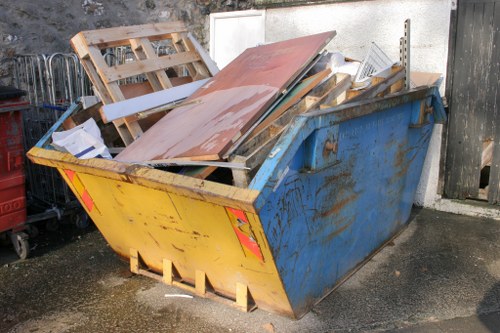
Bulky items need a different approach from ordinary bagged rubbish because they often take more room, weigh more, or need careful carrying through hallways and stairwells. Our furniture collection and bulky waste collection services are intended for items such as sofas, wardrobes, tables, beds, mattresses and other large pieces that are no longer required. These jobs are often easiest when the customer can point out which items are staying and which need to go, especially in shared buildings or furnished rooms.
Appliance removal can also be arranged for certain white goods and domestic equipment, subject to the item type and the handling required. Some appliances are straightforward to move, while others need a more cautious approach because of size, weight or contents. It is always sensible to mention the item category accurately, because the collection method, manpower and disposal route may vary. If you are unsure whether a specific item belongs with furniture, bulky waste or a separate appliance category, ask before booking so the quotation is based on the right work.
House, home and property clearance options
When a property needs more than a single-item removal, a wider clearance service can be the better fit. Our house clearance, home clearance and property clearance options are aimed at spaces that contain several items, mixed rubbish or accumulated contents that need removing in a coordinated way. These services are often used for full rooms, multiple floors, garages, lofts, flats or properties being prepared for handover or sale. The work is focused on removing the agreed contents efficiently and leaving the remaining items untouched.
Different properties call for different levels of sorting. A lightly furnished flat may only need a partial clearance, while a fuller home may involve more varied waste and more time to move everything safely. It is sensible to decide in advance whether the job is a specific room, a partial clearance or a more complete property clearance, because that distinction helps keep the quotation accurate. If there are fragile items, retained belongings or access limits, mention them early so the work can be planned around them.
For properties with several item groups, the most useful approach is usually a simple list of what remains and what needs to be removed. That allows the collection to be priced and scheduled with fewer surprises. Good preparation does not need to be complicated; a short inventory, a few photos if helpful, and clear access information are often enough to begin.
Clearance services for lofts, garages and storage spaces

Storage areas often become the place where old items gather over time, which makes loft clearance and garage clearance a practical extension of rubbish collection. These spaces can contain mixed belongings, broken household items, packaging, old tools, spare furniture and long-forgotten boxes. The work is usually a mix of carrying, sorting the agreed waste and removing items carefully from tight or awkward spaces. Because of the access involved, these jobs benefit from a clear description of how the space is reached and how much needs to be moved.
Lofts and garages also tend to include items that are not all rubbish in the same sense, so the boundaries of the job matter. Customers often want certain keepsakes, seasonal items or equipment left in place while the rest is removed. That means it helps to mark out what is staying before the collection begins. If an area contains dust, cobwebs, boxed material or several layers of stored belongings, the key decision is not whether it is tidy, but whether the waste to be removed is clearly identified.
Commercial waste collection for offices, shops and workplaces
Our commercial waste collection services are suitable for businesses that need routine or one-off removal of rubbish from workplaces, stockrooms, back offices and customer areas. This may include office waste, packaging, broken chairs, unwanted fittings or general non-hazardous business rubbish. Commercial loads are often different from domestic waste because they may contain a wider mix of materials and need collection around trading hours, building rules or shared-site access arrangements.
For offices and similar premises, it is useful to know whether the waste is being removed from a single room, a basement store, a whole floor or a multi-tenant building. The more clearly the load and the location are described, the easier it is to arrange the right type of collection. Businesses with recurring waste also benefit from understanding which items build up fastest, because the balance between convenience and cost often depends on the regularity of the load rather than on the amount alone.
Commercial jobs often involve
Commercial rubbish collection is commonly used for:
- office clear-outs and desk replacements
- retail packaging, display material and stockroom waste
- furniture taken out during refits or reconfiguration
- general non-hazardous business rubbish
- mixed items from back-of-house storage areas
Specialist rubbish disposal for mattresses, sofas and white goods

Some item types need a more specific approach because they are awkward to move, have disposal considerations or are best treated separately from general rubbish. Mattress disposal, sofa removal and white goods recycling sit in this category. These services are useful when a customer has a single large item, a small number of bulky items, or a specific product that should not simply be mixed in with everyday rubbish. The collection is then planned around the size, quantity and handling requirements of those items.
Mattresses and sofas are often difficult to move through narrow corridors or upper floors, so the route out of the property matters as much as the item itself. White goods can include fridges, freezers, washing machines and similar appliances, and the correct handling depends on the exact item. If you are asking for a quotation on any of these, naming the item precisely is better than saying only “appliance†or “furnitureâ€. That helps us assess the likely collection method and keep the price aligned with the real job.
Planning a collection and understanding the price factors
Rubbish collection pricing usually depends on a combination of volume, item type, access and handling time. A job involving a few bagged items on the ground floor is very different from a collection that requires carrying bulky furniture down several flights of stairs. Where useful, it may also depend on whether the waste is already separated, whether parking is straightforward and whether the load includes unusual items that need a specific disposal route. The most accurate quotation is usually the one based on the real conditions rather than a rough estimate.
To help with a quote, it is sensible to share the main items, approximate quantity and the property type. If there are details that could change the work, such as a narrow stairwell, gated access, heavy furniture or mixed materials, mention them at the same time. One clear message is often enough to start; if needed, extra information can follow once the likely collection type has been identified. That keeps the process straightforward without turning it into a long administrative exercise.
When people compare quotations, they are often comparing not only the price, but also what is actually included in the collection. It is therefore worth checking whether the estimate is based on loading assistance, item type and the amount of waste described. A carefully described job is easier to quote properly, and it reduces the risk of confusion when the team arrives to collect the rubbish.
About London
London grew from the Roman settlement of Londinium on the Thames and became the capital of England through centuries of political, commercial and cultural change. Its geography is shaped by the river, with crossings, docks, quays and embankments influencing movement and development for hundreds of years. The City of London remains the historic financial core, while Westminster developed as the seat of government and royal power. Across the wider city, layers of history are visible in street patterns, parish boundaries, railway lines and estate layouts that reflect different eras of growth. Medieval fragments survive beside Georgian squares, Victorian terraces, interwar housing and contemporary towers, creating a cityscape that is varied rather than uniform. Major landmarks include the Palace of Westminster, St Paul’s Cathedral, the Tower of London and Buckingham Palace, but London’s character also comes from its smaller districts, markets, bridges, museums, theatres and riverside walks. Parks such as Hyde Park, Regent’s Park, Hampstead Heath and Richmond Park provide large open spaces within the urban fabric, while places like the South Bank, Covent Garden, Camden, Greenwich and Notting Hill each bring distinct architectural and cultural qualities. The transport network, from Underground lines to mainline rail, river services and cycle routes, has long shaped the city’s daily rhythm. London is also notable for the way its boroughs combine residential neighbourhoods, commercial centres, industrial land and protected historic areas, giving it a complex pattern of local identities within one metropolitan whole.
Rubbish collection across varied property types
Different buildings create different collection conditions, so the service needs to adapt to flats, houses, offices, shops and managed premises. A ground-floor room with easy access is not handled in the same way as a top-floor flat or a basement store. That is why accurate information about entry points, lifts, parking and building rules matters. The aim is not to make the job more complicated than necessary, but to make sure the right collection is arranged for the space involved.
For landlords, agents and managing teams, rubbish collection often forms part of a broader upkeep plan. One-off clear-outs may follow end-of-tenancy changes, refurbishments or simply the accumulation of items that no longer belong on the premises. In these cases, it helps to be precise about whether the collection should focus on loose rubbish, unwanted furnishings or a fuller property clearance. Specificity saves time and usually leads to a better-matched quotation.
If you need rubbish removed in London, tell us what needs collecting and ask for a quotation. You can keep it simple, then add any practical details about access or item size if they apply. Our team can then match the job to the most suitable collection type and explain the next step clearly. For a straightforward start, send the basics and request a quote today.
Recycling, sorting and disposal responsibilities
Rubbish collection is not only about removing items from a property; it is also about directing suitable materials to the correct handling route. Some waste can be sorted for recycling, while other material needs to be disposed of in a different way depending on what it is and how it has been presented. Mixed loads are common, and the practical job is often to separate what can be recovered from what must go to disposal. This is especially relevant for furniture, appliances, cardboard, metal and other common collection items.
Customers do not usually need to sort every piece themselves, but it does help if the main categories are identified before collection. For example, a load containing general rubbish, a mattress and a small appliance may be easier to assess than one described simply as “miscellaneous wasteâ€. Clear naming supports better planning and avoids uncertainty about what is included. If some items are to remain on site, it is equally important to say so, because selective collection is a common part of the work.
Choosing the right collection for your load
Sometimes the best option is a single item removal; at other times, a larger clearance service is more efficient. The decision usually depends on how much is being removed, how varied the items are and whether they are spread across several rooms. A few bulky objects may be simpler to deal with through a furniture or mattress collection, whereas a mixed accumulation of items may fit better with a house, office or property clearance. There is no need to overcomplicate the choice if the waste itself is easy to describe.
It can also help to think about timing. If rubbish has built up after decorating, moving out, replacing furniture or reorganising a workspace, you may want a collection that fits around that transition rather than around an arbitrary schedule. Mentioning the reason for the load is not essential, but it can clarify whether the job is likely to be a one-off or part of a wider change. That kind of context is often enough to make the service recommendation more precise.
For anyone comparing options, the most useful question is usually: what type of collection matches the actual load? Once that is answered, the quotation becomes much easier to assess. If you are ready to proceed, ask for a quote and we can help you identify the most suitable rubbish collection route.